Before you choose a place for relocation, you want the numbers: what groceries cost, what dinner costs, and what your money does once you are there. The cost of living in Chiriquí, Panama, depends on how you eat and where you shop, and Don Morrison walks through both in this interview. It is the second in my five-part series with Don. If you missed the first, you can read how he found his land, his neighbours and his community.
Don is a born and raised Canadian who has lived in Chiriquí for nine years. He owns his home and its title here, sold the development to Autris, the parent company of Veritas Village, and is a Director, shareholder and CFO of Autris. The prices below are the ones Don and I talked about in October 2026. Prices change, so use them as a guide to how daily life looks, not as a quote.
What follows is the interview, edited for length and clarity. I am the host. Don is my guest.
*Note: Some of these links are affiliate links, meaning that if you book through my link, I will make a small commission (at no extra cost to you).
What does it taste like when you grow your own fruit?
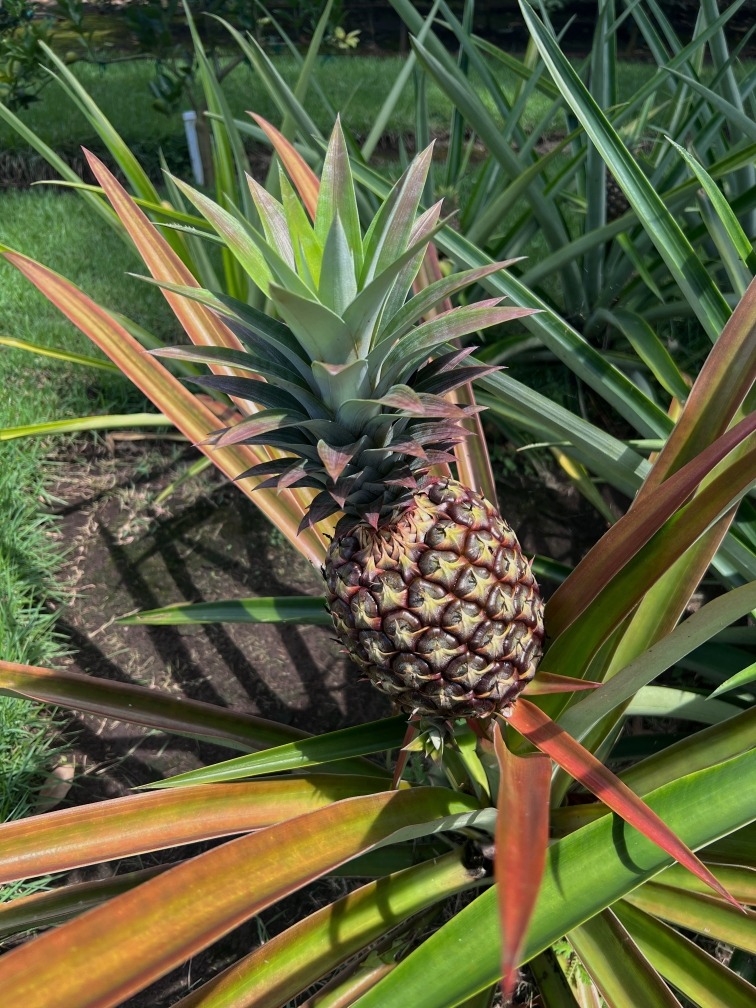
Don had listed the fruit trees in the food forest on his property: avocados, mandarin oranges, navel oranges, figs, mangoes, passion fruit and guanábana. I asked about one more.
Charlotte Tweed: Pineapple?
Don Morrison: Oh yes, pineapple.
Charlotte Tweed: Is pineapple there right now?
Don Morrison: Yes. Hopefully you’ll be able to nab one. There were pineapples growing here when I arrived. They take about nine months, like a baby.
Charlotte Tweed: It surprises me how long it takes for the fruit to ripen.
Don Morrison: I remember that after I’d been here a couple of months, there was a pineapple growing, the biggest I’ve ever seen. I have pictures. It was giant, and the taste of it! I don’t know what we’ve been eating all these years, because back home it’s all imported. The fruits and vegetables are picked green, and the bananas are sprayed down here to keep them until they arrive, so they don’t have the same flavour. The other benefit here is that you know what’s going into your food. There’s nothing better than walking into the food forest, picking a few passion fruit, bringing them back to the house and making a smoothie, all in 30 or 45 minutes. The same goes for the pineapples and all the other fruits and vegetables. We’ve grown crops of corn here, which is pretty cool. It’s not so good for eating on the cob, but good for tamales. We have yuca, and a root called otoe, and some sugar cane in the back. If you’re prepared to eat what is grown locally, or what you can grow here, there’s quite a variety.

How much does fresh fish cost in Chiriquí?
Don Morrison: We also have a lot of fish, because fish comes in from both the Caribbean side and the Pacific side. There’s a port called Pedregal in David, which is maybe 25 minutes away, and the boats come in for fish. In town we have a pescadora, a fishmonger, and it’s incredibly cheap. I go there regularly. He has a big container, and when he opens the lid I ask what’s fresh. He’ll say, “We have fresh tuna today, and we have shark,” which I’m going to have tonight, “or corvina, or red snapper.” A chunk of tuna that would feed four is going to run US$5. In Canada, I can’t even imagine what that would set you back.
Pedregal is a port in David, about 25 minutes from Veritas Village Chiriqui.
What does a bag of vegetables cost?
I did a rough calculation with Don on the bag of vegetables I bought and how that impacted the cost of living in Chiriquí, Panama.
Charlotte Tweed: We did a rough calculation, and I think the bag of vegetables I got, which was at least 30 pounds, cost US$12. It would be about $100 in Canada.
Don Morrison: At least. And here it’s fresh.
Charlotte Tweed: Yes.
Don Morrison: It’s a grab bag, a mystery bag. If you want to eat that way, your vegetables are cheap, your meats are cheap, your chicken and fish are cheap. What’s expensive is imported food. Your Cap’n Crunch cereal is probably the same price here as back home. What’s surprising is that beer is cheaper than bottled water.

Is beer cheaper than bottled water in Chiriquí?
Charlotte Tweed: Yes, local beer is cheap.
Don Morrison: My neighbours are well familiar with that. I like the local beers every once in a while. They’re pretty good. There’s quite a variety. In this area I’ve been to the local bars, which I wouldn’t call pubs, and you can get a beer for 75 cents to a dollar. Sometimes you can buy them in the supermarket for 35 to 45 cents a beer. That’s kind of crazy, but it’s fun. Then there are the bakeries which have local delicacies where you pay US$1 to US$1.50 for a pastry. You go to the fruit stand vendor for fruit and the vegetable vendor for vegetables, and then you go to the carnicería for your meat, your pork chops and your chicken. You can eat cheaply and healthily.
Charlotte Tweed: And eat well. It’s the processed items that are expensive here.
Don Morrison: And it’s not healthy for you either. My gardener also brings eggs over.

What does dinner out cost, and where do you eat?
Don Morrison: It depends where you go. Panama City is a modern city and costs more. If you and I went out for dinner and wine there, it would set us back $100. Here, dinner and wine might set us back $18, which is pretty nice. I like to go to the local places. We have something called fondas, where you can typically get breakfast and lunch. It might set you back $3 or $3.50, and they give you a plate of typical Panamanian food. There are always tiny restaurants. My favourite is within a 10-minute walk, not quite a neighbour. She runs a taco and quesadilla place out of her house. She has a little permit, and you sit on her porch. She has about four tables, and her kids serve you. It’s five bucks, and you get a big plate of tacos. You can bring your own alcohol if you want, or have fresh homemade lemonade. It’s great, and you can find lots of those little places around. The food is fantastic and cheap. You can walk to town if you choose. I should get bicycles, because I think people would like to bicycle. If you have a car, it’s four or five minutes. It’s close by.


What does retirement look like on a modest income?
Don Morrison: Down here, you can get an awful lot for your money. You can live so much better. If you were a retiree who didn’t own a home in Canada and made, say, $2,000 a month, you’d be hard pressed. Your apartment costs alone would probably eat most of that. You wouldn’t be surviving. Down here, you live like a king and queen. Your food costs are nothing, your healthcare is low, your rent is low, and you live in a beautiful environment with indoor and outdoor living.
This is Don’s view, and it is built on a retiree who owns no home in Canada. Rent, food and healthcare costs will differ from one household to the next, so run your own numbers before you decide anything.
What are the dry and rainy seasons like?
Charlotte Tweed: What is the dry season like? How hot does it get?
Don Morrison: It’s about humidity. When you don’t have the rain, you have lower humidity. What would you say the temperature is now? Are you in Celsius or Fahrenheit?
Charlotte Tweed: I still use Celsius.
Don Morrison: What would you say, the 20s? We’re not at 30.
Charlotte Tweed: Not 30 today. It’s quite comfortable. Even though it’s raining, it doesn’t feel overly humid. I would say 23.
Don Morrison: Yes. In the dry season, at the full heat of the day, we’re going to be at 30, 31, 32. But you still have the mornings, which are beautiful and cool. You get up and have your coffee on your porch. Between 10 in the morning and two or three in the afternoon, it’s going to be hot, probably around 30, sometimes 31 or 32 degrees, though not always. Then you do get the occasional rain that comes in and cools everything right down. This is agreeable weather for me. You have this for at least six or seven months of the year, and the rain is not always heavy. Sometimes it’s light.
Charlotte Tweed: Every morning has been sunny since we have been here. It’s not cloudy all day, every day, for six months straight.
Don Morrison: I lived in London, England, and that’s what it’s like there. When the rain sets in, the whole day is dreary and foggy. Here it comes in and passes through. The other benefit is that everything is so green.
Charlotte Tweed: Oh yes, so lush.
What can you grow, and what will eat it?
Don gardens in Panama with a long season and room to experiment. He also learned, the hard way, what shares the garden with him.
Don Morrison: If you’re a gardener in Canada, you have such a short season. My friend sent me a picture of hail. You work so hard on your tiny little garden, and the hail comes and turns it into a tossed salad, like that. Here, although you have to pay attention, you can throw seeds in the ground and do a lot. I remember the papayas. For some reason I wasn’t able to get the seeds to germinate, so I threw them out my back window. The other day I looked out and there were all these papayas growing, and they’re delicious. You can have a papaya every morning for breakfast. They’re good in smoothies and fruit salads too.
Charlotte Tweed: And with insects, you’d have different gardening issues here, obviously.
Don Morrison: You have to watch for that. We have leafcutter ants, and I didn’t know about them. I had bought a rainbow eucalyptus tree, about six feet tall. Some friends had shown me one, and I loved it. The bark is multicoloured, and it’s an absolutely beautiful tree. I planted it in my yard, and I wasn’t paying attention. A month or two later I came out, and it was a twig. A stick. There were no leaves on it. I thought the neighbours were playing a joke on me and had dug it up. I went to the neighbour’s wife to see what happened, and she said, “Come on.” She showed me and sure enough, you could see the little trail of ants going out. You learn what to watch for. You can do lots of things to prevent them. There’s something called diatomaceous earth, and you can put a ring of it around your little garden. You can also do natural companion planting. We have a large greenhouse operation here. It’s more tented than enclosed, and it’s all certified organic. The vegetables are fantastic. They don’t use any spray or chemicals of any kind, but they plant marigolds and do combination plantings with the vegetables. They also plant a neem tree, and neem oil is natural and fantastic. Put it on you and the bugs won’t bother you. Plant the tree next to or close to your food forest, and the bugs won’t bother it. But if you don’t pay attention, the ants will eat everything.
I went crazy and bought 200 rose plants at a dollar each. I’m up in a place called Volcán, and I thought, “I’m going to line the walkway to the rancho with 200 roses.” I put them all in, and I didn’t pay attention. I must have gone away for a week or two, and when I came back, same thing. There was nothing there.
Charlotte Tweed: They can clean a plant bare in a night.
Don Morrison: They can.
Charlotte Tweed: We have them in Mexico too. You see them on the little trail, all carrying leaves, and they’ve made a little highway all their own.

Ready to see what your money does to the cost of living in Chiriquí, Panama?
Numbers on a page only go so far. Leave the country. Land with your tribe. The neighbour who tells you which fishmonger is open, the gardener who brings the eggs, the cook who serves you on her porch.
If you want to see the place where Don buys his tuna and grows his fruit, explore Veritas Villages and the Chiriquí community. When you are ready to ask a question about daily costs, the team there can answer it, and you can contact Veritas Villages directly.

Next month, Don and I talk about healthcare in Chiriquí, starting with a $5 clinic visit and the specialist he saw the same Friday afternoon.
Disclosure: Don Morrison owns his home and its title in Chiriquí, sold the development to Autris, the parent company of Veritas Village, and is a Director, shareholder and CFO of Autris. Everything Don describes is his own experience, and the prices are those quoted in October 2026, which change. Do your due diligence, visit in person, and speak with a licensed Panamanian lawyer before you make any property decision.
All photos provided by Charlotte Tweed.

Charlotte Tweed is a relocation strategist and tribe builder who helps freedom-minded Canadians and Americans who no longer recognize their home country find where they belong. She is a Certified Travel Coach with The Travel Coach Network, accredited by the International Coaching Federation (ICF), a bestselling author of Roam Free: A Travel Transformation Memoir, and an award-winning travel photographer.
More than a decade ago, her first winter escape from Canada to Tennessee planted the desire for a different life. Long-term travel followed, from Egypt and Jordan to a three-month drive from Rome to Amsterdam, and then a move to Mexico, where she holds permanent residency. After a career in administration, she went back to college as an adult student and earned a travel and tourism diploma with honours. With 24 countries explored and time as managing editor of an expat publication, she pairs lived experience with practical guidance.
Today, Charlotte matches each client to a destination, a residency path and a community built on shared values, so they land in a home, not another country. Book a free Clarity Call to start. She is also building a cohort and retreat for people who have already decided to leave and want to find their tribe before they choose a place. Leave the country. Land with your tribe.
Serious about building a life abroad that aligns with your values? Download your free relocation guide and join A Case for Freedom Fridays, where Charlotte shares practical strategies, on-the-ground insights, and real conversations about engineering freedom abroad.