You have made the decision to leave. If you are thinking about moving to Chiriquí, Panama, here is the question nobody puts on the brochure: who do you land with?
If you have decided to leave the country, the next step is to land with your tribe. A beautiful house in a beautiful place still feels like a long way from home when nobody around you shares your values. That is why I wanted to hear from someone who did it in the other order: he met the neighbours first, and the community grew from there.
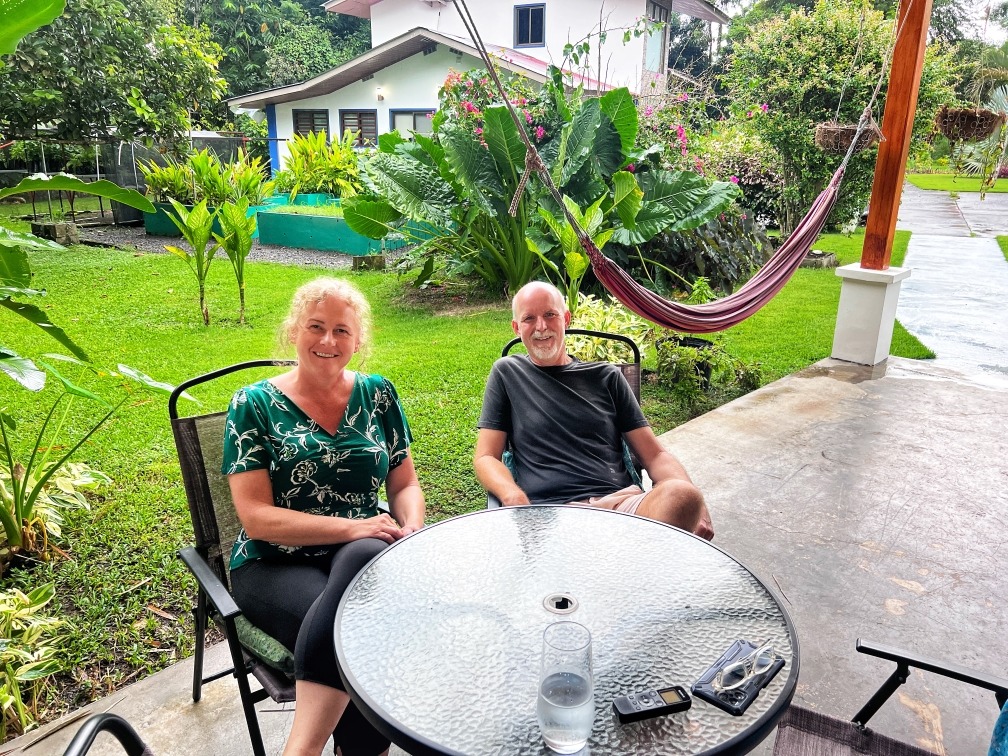
Don Morrison is a born and raised Canadian who has lived in Chiriquí, Panama, for nine years. He owns his home and its title here, sold the development to Autris, the parent company of Veritas Villages, and is a Director, shareholder and CFO of Autris. Veritas Villages is a freedom and sustainability-oriented community development company with villages in Costa Rica, Nicaragua and Panama. I sat down with him on his property in October 2026 for over an hour of stories about chickens, a hundred neighbours, a French couple, and the day he realized he wanted more than a quiet porch.
If you would rather see the place first, here is six minutes of video I filmed on the property. If you want to look at the community Don describes, you can see Veritas Village Chiriquí and the Veritas Villages communities on their website.
*Note: Some of these links are affiliate links, meaning that if you book through my link, I will make a small commission (at no extra cost to you).
What follows is the interview, edited for length and clarity about moving to Chiriqui, Panama. I am the host. Don is my guest.
Why did a Canadian choose Panama, and why Chiriquí?
Charlotte Tweed: How did you end up coming to Panama and living here?
Don Morrison: There’s always a story in everything, right? I had come to Panama before. I used to own a travel business, so I was familiar with Central America and had seen a number of countries here. I liked Panama because it has so much diversity. Especially in the province where we are now, Chiriquí, you can be at the beach in the morning and, if you want, in the mountains in the afternoon. You’ve got all of that within 45 or 50 minutes of where we are. I knew I wanted to live and retire in Panama. I like the climate. I’m a born-and-raised Canadian, and after 50 years you get tired of shovelling snow. I also have a passion for growing fruits and vegetables, so I needed a climate that would accommodate that. That’s what drove me here to begin with. After looking at lots of places in Panama, I settled on Chiriquí.
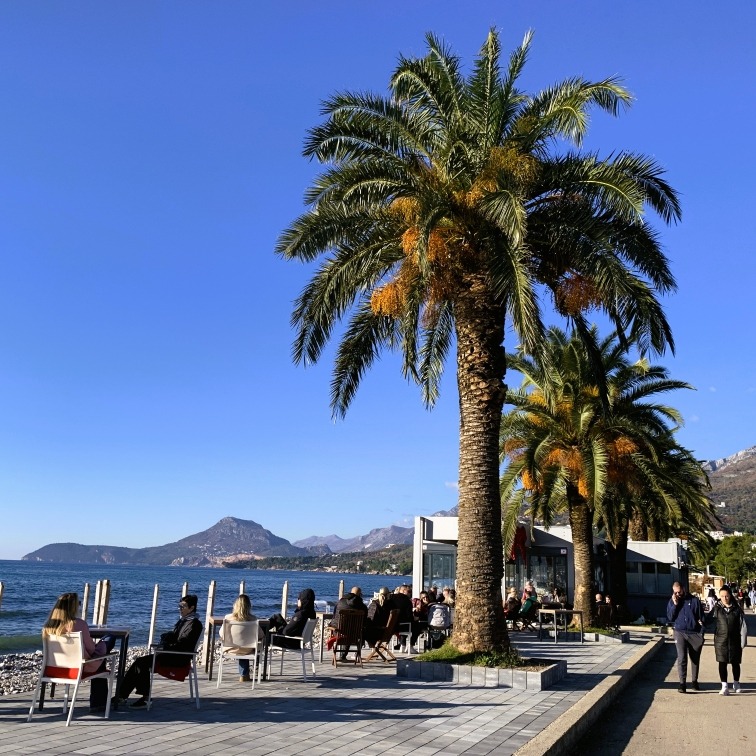
Chiriquí is the province in western Panama near the Costa Rican border. Don is not describing a resort town. He is describing a place where the beach and the mountains sit less than an hour apart, and where a gardener can grow fruit every month of the year.
How do you buy a house in Panama when the realtor walks away?
Charlotte Tweed: What about this property specifically? How did you find it?
Don Morrison: There’s a bit of karma in that one. When I first came, I owned a property by the beach in a place called Coronado, outside of Panama City. Then I started to look in Chiriquí. I put offers in on several properties, and for one reason or another they didn’t work out. I found this property on the internet. It belonged to a French couple who had owned it for about five years, and before that a Colombian family had owned it for probably 25 years. I went and looked at it, and I fell in love with it. But it took about a year to buy.
The French couple went yes, no, maybe, up and down. Here in Panama, the realtor’s function is to put the two parties together, and then they walk away. That’s very different from Canada, where you don’t meet the owners. You walk into a vacant house. Here, the realtor dropped me off and said, “Here’s the house; go talk to them and see if you can strike a deal.”
Charlotte Tweed: Interesting.
Don Morrison: It was very helpful, because I got to understand their motivation. This French couple had three small kids and wanted to go back to France to put the kids in school. They had to leave by the end of August to get the kids into school in September. I was here in early August. I had been coming three or four times, looking at other properties, but this one was always on my mind. I made them an offer. I said, “The money’s with the lawyer in Panama City. I’ve written up the offer and signed it. If you want to accept it, you call her up, go and sign, and away you go.” I didn’t know whether they would accept.
I got back on the plane and went back to Canada. I remember it was a Friday when I arrived. I turned on my cell phone while I was walking down the aisle of the plane, and the lawyer texted me: “Guess what, Don? They came; I gave them the money, they signed, and you own the property.” Included in the chattels were 12 chickens, one duck and a dog.
I thought, “Oh man, I’m in Canada, and now I’ve got all these farm animals. What am I going to do?” The neighbours helped. I didn’t know them, but they came and looked after things until I could get down here.

What did your neighbours do the morning you arrived?
Before Don had unpacked, his neighbours had a plan for him. It involved a large pot and one of his own chickens.
Charlotte Tweed: That’s nice. So, Panamanians are all your neighbours?
Don Morrison: All Panamanians. I’m known as Blanquito, which means “whitey.” That’s my nickname in the barrio. When I first came, I was the only white guy in the whole barrio. I think a few more have come in now. Americans and Canadians are coming in. It’s becoming more popular, obviously, for a variety of reasons. I used to go running in the afternoon, because I like the heat. I’d run around the neighbourhood, and everyone sat on their porches looking at me like, “This guy’s crazy. He’s running and we’re sitting here.” That’s how I got to know them.
I bought the property while I was in Canada, and two months later I managed to get down here. I’d even forgotten how to get here. I arrived late at night with my phone dying, and I went to sleep. The next morning the neighbours came over. The Gonzalez family, her husband and she, said, “Welcome to the neighbourhood.” They had a daughter who was turning 15, which is a big age. They have a party night.
Charlotte Tweed: That’s a Central America thing. Mexico too. The quinceañera.
Don Morrison: Oh yes, it is. They came over and said, “Welcome to the neighbourhood.” The daughter spoke some English, and I had absolutely zero Spanish. They said, “Are you hungry?” I said, “Yes, I’m hungry.” They said, “We’re going to make you sancocho. You’re going to have to kill one of your chickens.” That was the first and last time I will ever do that. It was not a good experience for me, but I had to kill this chicken. Then they made the sancocho in a giant pot that would feed a lot of people. There were three of them: the daughter, the husband and the wife. Little did I know, as the day wore on, people started to come to the rancho. About a hundred people came. The entire barrio came to welcome me to the neighbourhood.
Sancocho is a traditional Latin American and Caribbean stew or soup made with meat, root vegetables such as yuca, plantains, and potatoes, and herbs in a savoury broth.
Don Morrison: They didn’t leave until 5:30 in the morning, when all the food and all the alcohol were gone. My neighbour Julio was the last one. I said to him in very bad Spanish, “There’s nothing left.” He said, “Well, I guess I’ll go home now.” That’s how I was introduced to the neighbourhood. They became close to me over the years. The wife in particular, whom we lost to COVID, would come over and teach me about the plants. She showed me all the spices on the property. We have mint, turmeric and garlic; all of these things I didn’t know, and she taught me when to plant them. That has been very beneficial. When I needed people to do renovations, who do you get? It’s usually a family member. When someone says, “I know a painter,” they usually mean my uncle’s out of work, and we put a paintbrush in his hand, and he can paint. That’s how I came to the property and started.
Charlotte Tweed: Wow. So you had to butcher the chicken yourself?
Don Morrison: Yes, I did. I had a very dull knife left by the French couple. My neighbour strung the chicken up, and I was supposed to cut its throat, but I couldn’t because the knife wasn’t sharp. I ended up stabbing it. I turned around, and they were laughing and filming it. It was like a horror story, with the blood spurting on me. I thought, “This is insane.” I didn’t know you take a chicken, put it in boiling water, and all the feathers come off.
Charlotte Tweed: I grew up on a farm, so I can butcher a chicken. I remember how to pluck it and gut it, and I can do that, but I cannot chop off the head. That was my father’s job. He invented his own little cone. He put the head through it and chopped it off, so the chicken wasn’t flopping all over the place, making a nasty mess. And yes, I vividly remember the smell of the wet chicken feathers as Dad scalded the chickens so they were easier to pluck. Think wet dog combined with pungent, musty earth.

How did the chickens, the house and the Airbnb turn into a community?
Don Morrison: We have chickens here, but I wanted them for eggs, and that’s what I do with them. We have a gardener here, and a couple of months ago I noticed there were more chickens in the group. He said, “Oh yes, I bought a few.” I asked, “Are they egg layers?” He said, “No, not really.” Every once in a while one disappears, so I guess he’s using them. It’s natural here. It’s normal.
These are free-range too, which I like. In the morning I open the chicken coop, and they all run out and play around. As you know, they come back at night. They’re easy to maintain, and they eat bugs, so that’s helpful. We also use the deep litter method. You put charcoal down as a foundation, and on top of the charcoal we put rice husk, called cáscara de arroz, which is very cheap. It’s a byproduct of rice, so you can get it virtually free. It keeps the odour down.
Charlotte Tweed: I noticed when we were by the chicken coop, it didn’t smell.
Don Morrison: It’s pretty good. Some people use sand, which they call arena, but that’s what we use.
Charlotte Tweed: Are the chickens laying again? You had mentioned they stopped laying for a bit.
Don Morrison: They’re not laying yet, but they’re close. This is a new batch, at three going on four months. I had guests before who bought a fake egg, a Silly Putty egg, to encourage the hens to lay. They put it in the coop, and sure enough, the hens started to lay. I might try that, but they’re right at the edge. In my experience, if they’re healthy and happy, they’ll mostly lay one egg a day. We’ve got around 20, so we should have about 20 eggs a day, which will supply all the eggs we need for the houses we have here.
Don kept the chickens for eggs. The house became the starting point for something bigger.
Charlotte Tweed: Now, when you bought the property, what buildings were here?
Don Morrison: We had the main house, which was probably 25 years old and in rough shape. You had to see past what it was to envision what it could be. I’m sure couples came, and one or the other said, “No.” There was grime and dirt and filth, and there were no screens on the doors, so all the bugs came in through the windows. No one had cleaned it. There was the main house, and this one guest house, and there were bananas hanging in the living room. It was very rustic. I think it was the mother-in-law’s house, and the idea was that she would come and get sick of it in two or three days, and then go. My first task was to renovate my house, which I did, and I learned from it. Then I renovated my mother-in-law’s house, which we call the guest house. After that, I did Airbnb. Well, it was something called couch surfing, which I didn’t realize meant people don’t pay.
Charlotte Tweed: It’s free.
Don Morrison: It’s free. They stay on your couch. One of the couch surfers was a professional photographer. He got down on his belly and shot the main house at night, with the sky turning and all the lights on. It’s beautiful, and that photo is in the Airbnb listing. People look at it and say, “Oh, I want to stay there.” So we turned it into an Airbnb, and it was a surprise that it took off. It took off to the point that I rented rooms in my house and then rented the guest house, and that was so full that I realized I could build another house. The one you’re in, I built next. That got full, and I built the other one.
Over those years, the mix of people has changed. Eight years ago, probably 80 or even 90 percent of guests were coming to visit Panama on vacation. It has flipped. Now about 20 percent come for vacation, and 80 percent are looking to live here. That moved us into longer-term rentals. Then people started to ask me, “Do you have land for sale? Could I buy a lot on your property?” I realized I could have a community, and that would be cool. Some Airbnb guests came and stayed a year; some stayed two years, and they became friends. You have fiestas in the rancho and potlucks. I realized this sense of community was important. I didn’t know it at the time. I thought I wanted to retreat from Canada, drink my coffee on the porch and enjoy the quiet, but I realized I wanted a sense of community.

How did Don find Veritas Villages?
Don Morrison: That’s what led me to Veritas Villages. It led me to look for others who had done this and had incorporated everything: solar, a food source like our food forest, a water source, and many things that could be self-sustaining, with like-minded people. I found them on the internet. I called their CEO, Patrick Hiebert, out of the blue, and he answered the phone. I said, “Hi, my name’s Don Morrison. I’m up in Chiriquí, and I’ve got this little project, but I love what you’re doing.” He said, “I’ll come up and see you.” I said, “That would be great.” He said, “I’ll come up on Friday.” That was two days later. He came and stayed in the house, and we shared some wine and some philosophy, and that’s how it all started. Then we put it all into one big group.
Patrick Hiebert is the CEO and Chairman of Veritas Villages. Don did not have a contact at the company. He had a phone number and a question. If you would like to see what came of that Friday visit and a bottle of wine, you can explore the Veritas Villages communities, including the Chiriquí village.
Why does it matter to meet your neighbours before you move?
Charlotte Tweed: That’s fantastic. Community is very important. It’s the heart of everything I do. I want to find the tribe and build the community ahead of time, and then bring people into the destination. That’s what I’m focusing on right now.
Don Morrison: It’s an interesting thing to put together. Lots of developers call something a community, but they’re building homes and selling them. This is so much more than that. One benefit I’ve found is that everyone who has bought a lot so far has come here, so I get to vet my neighbours. You sit with them having a glass of wine or a coffee, chatting, and they ask you questions because they want to know what it’s like to live in Chiriquí. Can I get fresh fruit? What’s the cost at the supermarket? Where can I get all of these things? Then you get to know them. That has been beneficial. Starting next year, in the dry season, which is a good time to start, we’ll begin building our homes.
This is the part that stays with me. Don has met every person who has bought a lot so far, because each of them came to Chiriquí first. They drank wine on his porch and asked the questions you would ask: what does the supermarket cost, where do I get fresh fruit, what is it like to live here? You can read every brochure in the world and never learn what a day looks like. Meeting people before you move is the best form of research there is.

What happens next at Veritas Village Chiriquí?
Charlotte Tweed: My next question was going to be when you anticipate the building to begin?
Don Morrison: January. We’re heading towards the tail end of October now. You can build in the rainy season, but we’re slating a pool to be built here. We could have a pool tomorrow if we dug a hole and filled it with water, but if you want to do it properly, you wait for the dry season, which starts around December 15. I remember the first year, it was like a light switch. It had been raining every afternoon, and then the dry season hit. The rainy season here, as you know, is not a torrential downpour all day. It’s usually a bright, sunny morning, and the rain rolls in during the afternoon. It’s very refreshing, and then it clears up. The seasons are very defined, or at least they used to be. Around December 15 the dry season arrives, and when it hits, it hits.
You get sunny days every day, with maybe one day of rain in 30. That goes on for several months, then you get a bit of a shoulder period, and then you’re into the rainy season, though some months, even in the rainy season, are less rainy. We’ll do the pool in January, I think, and hopefully we’ll get a few houses underway. The hydroponic greenhouse is going to be my passion. We’ve got the plans and the towers. We’ll probably wait until we have a few more residents, because if you do it right, you can produce a lot of food in a very small area. The food forest is not a big area, but we have more than 50 varieties of fruit trees: avocados, mandarin oranges, navel oranges, figs, mangoes, passion fruit, guanábana, the whole range.
Don describes the plans as he sees them today: a pool in January, a few houses underway, and a hydroponic greenhouse once more residents are in place. Timelines change, especially when building, so treat these as his intentions rather than promises.
Ready to meet your neighbours before moving to Chiriqui, Panama?
You will not find a community by scrolling. You find it by showing up. Don built his by saying yes to a stranger who wanted to buy a lot, a French couple who wanted to go home, and a neighbour who wanted him fed.
If you want to see where he ended up, visit Veritas Villages and learn about the Chiriquí community, its neighbours and its plans. When you are ready to talk to someone on their team, the site also lets you contact them directly.

Next month, Don and I talk about what living in Chiriquí costs, from a $5 chunk of fresh tuna to a beer that costs less than bottled water.
Disclosure: .Don Morrison owns his home and its title in Chiriquí, sold the development to Autris, the parent company of Veritas Villages, and is a Director, shareholder and CFO of Autris. Everything Don describes is his own experience. Do your own due diligence, visit in person, and speak with a licensed Panamanian lawyer before you make any property decision.
All photos provided by Charlotte Tweed.

Charlotte Tweed is a relocation strategist and tribe builder who helps freedom-minded Canadians and Americans who no longer recognize their home country find where they belong. She is a Certified Travel Coach with The Travel Coach Network, accredited by the International Coaching Federation (ICF), a bestselling author of Roam Free: A Travel Transformation Memoir, and an award-winning travel photographer.
More than a decade ago, her first winter escape from Canada to Tennessee planted the desire for a different life. Long-term travel followed, from Egypt and Jordan to a three-month drive from Rome to Amsterdam, and then a move to Mexico, where she holds permanent residency. After a career in administration, she went back to college as an adult student and earned a travel and tourism diploma with honours. With 24 countries explored and time as managing editor of an expat publication, she pairs lived experience with practical guidance.
Today, Charlotte matches each client to a destination, a residency path and a community built on shared values, so they land in a home, not another country. Book a free Clarity Call to start. She is also building a cohort and retreat for people who have already decided to leave and want to find their tribe before they choose a place. Leave the country. Land with your tribe.
Serious about building a life abroad that aligns with your values? Download your free relocation guide and join A Case for Freedom Fridays, where Charlotte shares practical strategies, on-the-ground insights, and real conversations about engineering freedom abroad.