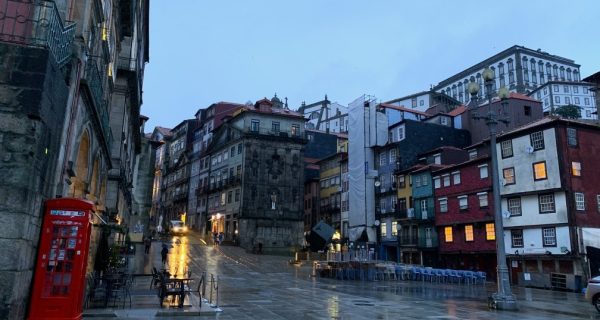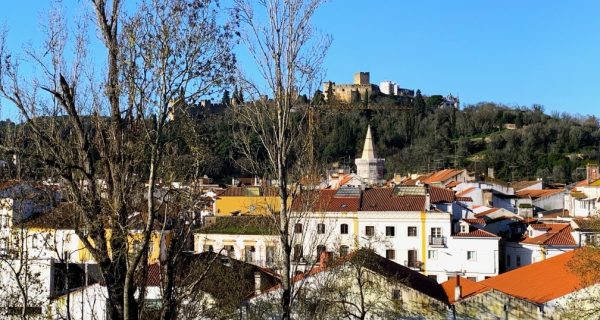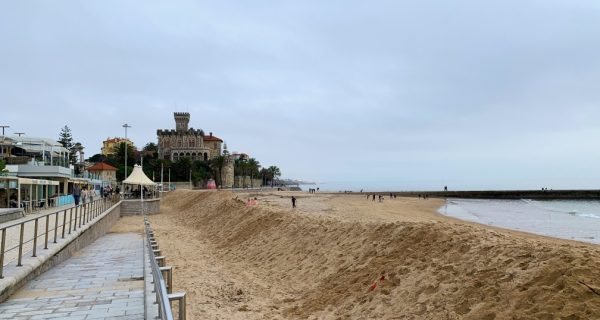
Lisbon was my first stop in Portugal. The city is home to more than three million people, so it’s always bustling with tourists, yet it still retains its classic European charm. You’ll find cobblestone streets winding through neighbourhoods with Gothic, Roman, and Baroque buildings. The pastries are incredible, perfected over generations. Lisbon feels modern and lively, yet you can sense the adventurous spirit of the explorers who once left from its shores.
*Note: Some of these links are affiliate links, meaning that if you book through my link, I will make a small commission (at no extra cost to you).
History Bite
Have you ever noticed how Portugal sits at the center of world maps? The Portuguese are proud of their explorers, and you can feel that sense of importance even today. Back in the 15th century, this small kingdom on the edge of Europe, with just about a million people, changed the world by launching the great age of maritime exploration.
This was the spark that set off what we now call the European Age of Discovery.
In the 1400s, Prince Henry the Navigator set out to find a sea route to Asia by sailing south along Africa’s coast. His boldness inspired generations of Portuguese explorers. Later, Fernão de Magalhães (Ferdinand Magellan) organized the first trip around the world between 1519 and 1522, which was an incredible achievement for that era. (History, A&E Television Networks, 2023)
In the last decade of the 15th century, Christopher Columbus, hailing from Genoa, Italy, embodied the same adventurous spirit. He set out on a westerly course across the Atlantic Ocean to search for an alternative route to the Indies. He inadvertently “discovered” a new continent on his journeys. Columbus had received his training in navigation in Lisbon; although neither Portuguese-born nor sponsored, Columbus was Portuguese-trained. Columbus moved to Lisbon in 1476 and lived there for several years, seeking the support of Portuguese King John II to help fund his explorations. While there, he gathered nautical and geographic intelligence from the returning sailors. The king declined Columbus’s proposal to sail west and find the Indies, so Columbus sought help from the king’s rivals, Ferdinand and Isabella of Spain.
All this exploration and adventure made Portugal the richest country in the world during the 1500s.
As the Portuguese ventured into the Atlantic Ocean, they encountered the Azores, a group of islands more than 1448 kilometres (900 miles) west of their homeland. Around 1427, Portuguese sailors reached the islands. In 1439, Portuguese immigrants established thriving peasant agriculture producing sugar and wine, which evolved into wheat and other crops. The Azores were critical in providing vital supplies for ships returning from Africa, Asia, and the Americas. During the 19th and early 20th centuries, when the islands had become overpopulated, the Azores provided more than 70 percent of Portuguese immigrants to the United States. Many Azoreans also emigrated to Canada.

Affordability
Lisbon is one of the pricier places to live in Portugal. While the country is more affordable than much of Europe, costs are going up. To put things in perspective, the average monthly salary in Lisbon is about €1,200. With this income, rising prices—especially for housing—can be tough. Renting a one-bedroom apartment in the city center usually costs between €1,000 and €1,500 per month, while places outside the center are around €700 to €1,000.
A family of four can expect monthly living costs, excluding rent, to be around €2,657.90 as of October 2025. This is an increase from 2023, when estimated living costs (not including rent or mortgage payments) were €2,316.60 for a family of the same size. (1 USD = 0,86 EUR).
A single person can expect costs (without rent) to be around €747.60 as of October 2025, an increase from 2023 at €656. For expats, additional costs such as international schools, private healthcare, and language classes may need to be considered when planning a move to Lisbon. These expenses can vary widely based on personal choices and needs. For a current monthly breakdown of the prices of goods that an average person can expect, check Numbeo.com. I have found Numbeo to be accurate based on prices I witness when visiting countries. Remember, the cost of living is all relative to lifestyle.

Climate in Lisbon
I visited Lisbon in both October and January. October was beautiful, with sunshine and a gentle breeze. January, on the other hand, brought lots of rain and fog, which even caused some flight delays. A flight attendant told me that winter’s rainfall was much higher than usual. Just the year before, in 2022, Portugal had a severe drought, and water was rationed. People could only use water in the morning and at dinner, not during midday. Then, in 2023, the weather changed with heavy rains and flash floods.
“We asked for rain, and the heavens answered, I’ll give you rain.” Her words and eyes were heavy as she recounted flooding incidents, causing the death of an elderly lady in a lower-level apartment, and how a man had to have his windows smashed out of his car by rescuers as he became submerged in a tunnel.
Despite the rain in January, daytime temperatures were comfortable, usually around 15°C (59°F), and dropped to about 10°C (50°F) at night. Of course, what feels like good weather varies for everyone. If you see a place described as having ‘springlike temperatures year-round,’ it’s a good idea to look at the monthly wind and rain averages, not just the yearly ones. Wind and rain change how the temperature feels, affecting your experience.

Average Temperature and Rainfall in Lisbon
The warm season lasts three months, from June to September, with an average daily high temperature above 26°C (78°F). The hottest month in Lisbon is August, with an average high of 28°C (83°F) and a low of 19°C (65°F).
The cool season lasts for close to four months, from November to March, with an average daily high temperature below 17°C (63°F). The coldest month in Lisbon is January, with an average low of 8°C (47°F) and a high of 15°C (58°F).
The rainy period lasts for nine months, from September to June, with a sliding 31-day rainfall of at least 0.5 inches. The month with the most rain in Lisbon is November, with an average rainfall of 3 inches. The rainless period of the year lasts for three months, from June to September. The month with the least rain in Lisbon is July, with an average rainfall of 0.08 inches. Note: Lisbon experiences significant seasonal variation in monthly rainfall. Plan for dry, hot summers and mild, wet winters.
More good news for some, snow is unlikely in Lisbon.
Lisbon’s average hourly wind speed experiences mild seasonal variation over the year.
*Weather statistics retrieved from weatherspark.com.
Political Stability
Politics plays a major role in why many people are moving or looking to relocate. The world is in turmoil, a fact hard to overlook. Portugal is quite stable compared to other countries at this time. Portugal’s borders have remained unchanged since the 12th century—in Europe—think about that for a moment. The Portuguese are a strong, stable, confident, and proud group of people; their borders reflect the same attitude.
For expats, Portugal’s political stability means a reliably safe environment, which is an attractive feature for families and individuals seeking peace of mind. The safety and well-being that come with political stability further enhance Portugal’s appeal. This combination of factors creates a supportive and welcoming environment for expats, fostering a sense of belonging and community in their new home.

Attractions & Lifestyle
Additionally, the lifestyle in Lisbon is enhanced by its walkable neighbourhoods. It is not uncommon for people to use public transportation rather than own a car. Feet are great for getting where you need to go. Tram 28 is the oldest in Lisbon (inaugurated in 1914) and offers the best way to get around the Old Lisbon neighbourhood to see the major attractions. You can access the tram 24 hours for €7* when you purchase a public transportation card. The card includes access to the trams, metro, funiculars, public buses, and the Santa Justa Lift. *Prices subject to change.
Food and wine are integral to Portuguese culture. Expect to indulge in incredible cheeses, pastries, and port wines. Slow-cooked meats melt in your mouth, topped off with creamy mashed potatoes smothered in savoury gravy. One thing to note when dining in Lisbon, and Portugal in general, is to make dinner reservations. The best restaurants fill up fast and are often booked in advance. Restaurants usually open from noon to 4:00 pm and close until 7:00 pm, when they reopen for dinner.

If you plan on being a walk-in to a restaurant, arrive by 7:00 pm, or you will likely not get a table. The culture is not based on fast food; rather, dining is an experience meant to be relished and shared with friends and family. Dinner often lasts two hours or longer. Reservations are important; when people arrive at 7:00 pm, they don’t leave until after 9:00 pm, so the tables don’t turn like they do in Canada and the United States. It is also not uncommon for a restaurant to not open at all for dinner, with no reason given. Save yourself the frustration and disappointment, book ahead.
Strolling along the piers, shopping, coffee (Portugal is known to have some of the best coffee in the world, according to a local), bars, and music are all popular lifestyle choices in the country. There are numerous historical monuments to explore. And of course, spending quality time with friends and family.
Monument to the Discoveries

Standing as a sentinel over the Tagus River, the Monument to the Discoveries depicts great explorers of the past who bravely sailed the seas to lands unknown. Thirty-two significant characters of the Portuguese overseas expansion and cultural names from the age of the Discoveries adorn the monument. All are portrayed with symbols indicating their identity: navigators, cartographers, warriors, colonizers, missionaries, chroniclers, and artists.
Belém Tower

One of the most recognizable landmarks of Lisbon, the Belém Tower, was built between 1514 and 1520. Belém is Bethlehem in Portuguese. Also on the Tagus River, the tower was used to defend the city in medieval times. The tower is near the Monument to the Discoveries and Jerónimos Monastery, making it easy to see the sites on the same day. You must purchase tickets for the tower online ahead of time, or at a visitor centre in the park near the tower. Don’t stand in line and wait right at the tower; you’ll be sent to the ticket counter only to start your wait in line all over again.
Jerónimos Monastery

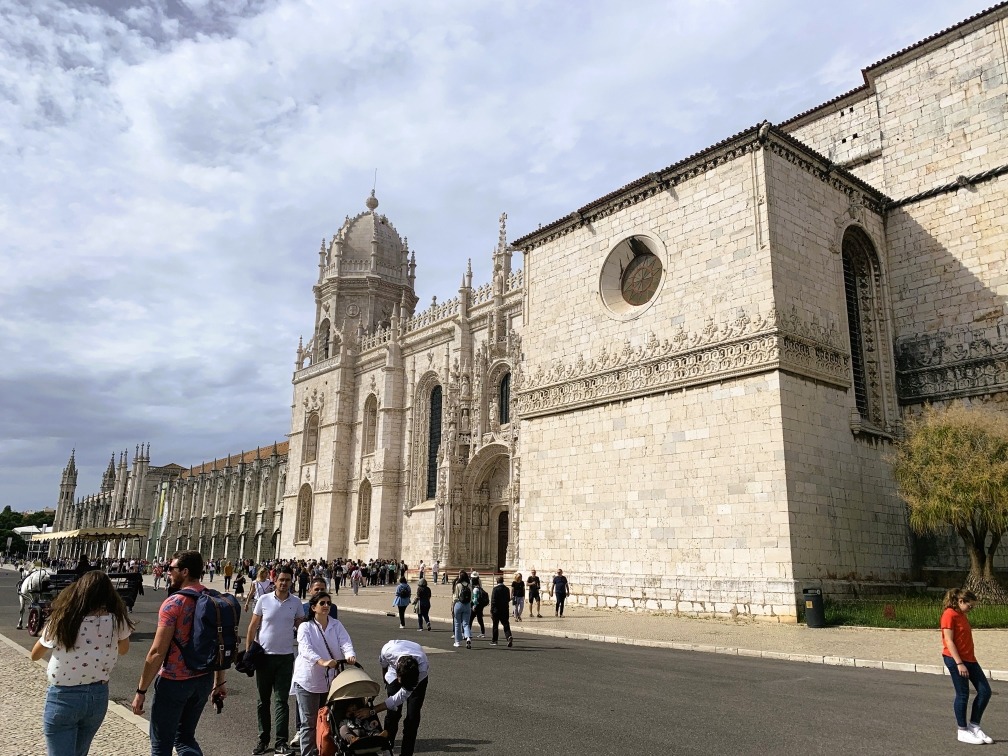
Wow factor. Jerónimos Monastery was my favourite attraction in Lisbon. Stunningly gorgeous with detail you can stare at all day, the cloister and church are a sight to behold. The two-storey cloister’s decorative ornamentation and symbolism gave me goosebumps. The church, which is free to visit, feels eternal with its six incredibly sculpted columns. Tickets for the monastery must be purchased ahead of time.
Pastéis de Belém

After seeing all the above sites in the Belém district, walk a few more blocks to wait in another line for a completely different experience. The Belém pastries are famous and will initiate you into the ancient Portuguese sweets culture. Founded in 1837, the bakery has three separate lineups for service. One on demand, where you make your way into the bakery to buy your artisanal pastry. The second is a call-ahead pick-up door. The third is table seating in the bakery. We opted for door number one and took our pastries to the nearby park to devour. The lady in front of us said the pastries were worth the wait, and she was right.
The base is like tender, flaky, yet perfectly crispy phyllo pastry, with a creamy, not-too-sweet custard filling. The combination is topped with a golden-brown, caramelized finish. Do yourself a favour and buy yourself more than one.
Lisbon Cathedral

The Lisbon Cathedral, or the Sé de Lisboa, is the oldest church in the city, dating back to the 12th century. From the outside, the church resembles a medieval fortress. The central rose window is the highlight. Don’t miss the balcony, where you can go outside and see the window up close. I arrived 45 minutes before closing time, and the attendant assured me there would be enough time to see the entire cathedral if I paid the €5 entrance fee. Time was a little rushed as they began shutting the lights off and closed 15 minutes early. As noted earlier, establishments open and close whenever they please in Portugal.
Rua Da Prata “Street of Silver”

On the surface, Rua Da Prata, two blocks over from the famous Rua Augusta, looks like a regular European street. Underneath the street, archeologists have discovered a 2,000-year-old Roman street with ancient shops and cafés similar to above. Many people are unaware that Lisbon is 1,000 years older than Rome.
Rua Augusta

The Rua Augusta Arch is a memorial-type stone historical building and visitor attraction in Lisbon on the Praça do Comércio (Commerce Square). The square was built to commemorate the city’s reconstruction after the 1755 earthquake.
The arch welcomes you to the street via Commerce Square. The street is alive with shops, outdoor restaurants, and cafes. Get energized from the life of the city on a beautiful walk on white cobblestones. Sit down and enjoy a coffee while watching the day and people go by. Then head to a different street to dine as this street tends to be overpriced with a lower quality of taste (more advice from locals).
Commerce Square

Lisbon’s most important square, Commerce Square, was built on the site where the old Royal Palace used to exist before it was destroyed by the 1755 earthquake. The square was the entrance to the city and the key to maritime trade. The south end of the plaza is open and leads to the Tagus River. If you are looking to get away from the crowds and enjoy some space to soak in the surroundings, take time to enjoy this massive square.
St. George’s Castle (São Jorge Castle)

The castle began as a smaller fortress built in the fifth century and was modified and enlarged over time by the Moors. St. George’s Castle reached its maximum splendour during the 13th century and lasted until the 16th century, when it was occupied by both the Kings of Portugal and the Bishop. (“São Jorge Castle – Hours, prices and how to get there – Lisbon”)
Sadly, due to flight delays, plans to visit the castle were thwarted. Even well-travelled people cannot always anticipate what is going to happen. The three hours set aside to visit the castle went up in smoke when we were rerouted to Porto to refuel since our plane could no longer sustain circling Lisbon due to heavy rains and fog.
We could see parts of the castle from the Lisbon streets; however, the high buildings block views from street level. Another time, São Jorge, another time…
Rossio Square

One of the liveliest and prettiest squares in Lisbon is Rossio Square. Restaurants and bars are plentiful. The square features monuments and fountains and is illuminated at night. In the center of Rossio Square sits the Column of Pedro IV of Portugal, known as “the Soldier King”.
Santa Justa Lift

The Santa Justa Lift is not a tower monument as it appears from the exterior. It is an elevator and is the fastest way to get from the Baixa neighbourhood to the Bairro Alto district. The lift has been considered part of the Lisbon transportation system since July 10, 1902. Before it existed, it was difficult to travel from lower to upper Lisbon and vice versa.
Fado
Fado is the musical expression of Lisbon and Portugal. The word “Fado” comes from “fatum” in Latin, which means destiny. The frustration and fatalism felt by the inhabitants of Lisbon’s humble fishing neighbourhoods, ports, and taverns are reflected in this melancholic and nostalgic music. (“Fado Music – Authentic Fado Restaurants in Lisbon”) Fado is the history and scarred soul of Portugal put to the poetry of song. This music is so moving that people who do not consider themselves emotional will find tears rolling down their cheeks, even if they cannot understand the words. The songs are often about women or the sea, sparking longing and nostalgia—remembrance of what was lost, the country that could have been.
Lisbon, Portugal, a City with Character

Lisbon, the capital of Portugal, is a good choice for those seeking modernity and history. People are helpful, and English is widely spoken. The streets are clean and walkable, yet there is a lot of graffiti. Different neighbourhoods offer different experiences and cultures. Quality of life in Portugal is lauded, yet one concern is rising prices. Locals feel they are priced out of the housing market as wages are not increasing with the cost of living.
If this article intrigues you, sign up for my weekly newsletter, A Case for Freedom Fridays, where I dive into strategies and stories to help you thrive in a new country and achieve liberty.
All photos by Charlotte Tweed

Charlotte Tweed is a Certified Travel Coach with The Travel Coach Network, accredited by the International Coaching Federation (ICF), and founder of Liberty Travel Coach, where she helps aspiring expats use long-term travel as a pathway to freedom and relocation. Her transformational journey began with her first winter escape from Canada to Tennessee—a pivotal decision that sparked a deeper desire for change. She then launched into long-term travel, starting with visits to Egypt and Jordan, followed by a three-month overland trip from Rome to Amsterdam that changed the course of her life.
Today, Charlotte offers exclusive 1:1 coaching and hosts relocation travel retreats designed to help others overcome fear, gain clarity, and take actionable steps toward living abroad. With 19 countries explored and a background in tourism and expat life, she blends deep personal insight with practical guidance.
Are You Craving More Freedom, Purpose, and a Place to Truly Belong? Get your free guide and sign up for A Case for Freedom Fridays here.