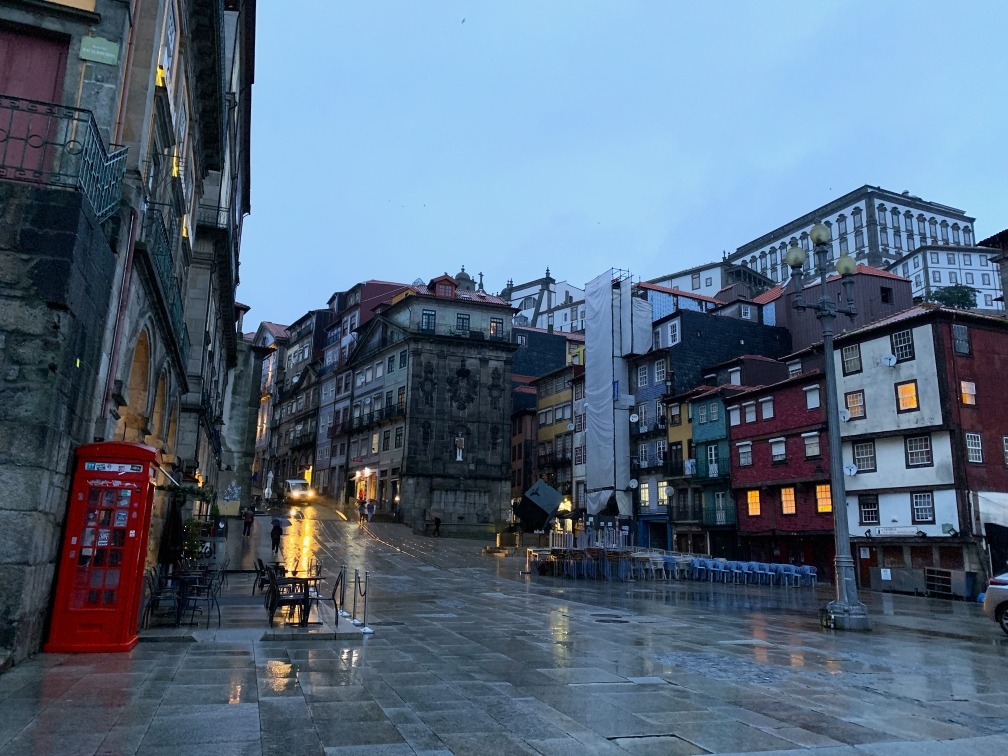
Porto, Portugal, stands out from Lisbon with its old-world charm and nostalgic feel. The city is known for its port wine, lively business scene, and the Douro River wine region. As Portugal’s second largest city, Porto sits along the Douro River in the northwest, about 280 kilometres (174 miles) from Lisbon. The city’s architecture is a blend of fresh ideas and long-standing traditions. Let’s start exploring Porto.
*Note: Some of these links are affiliate links, meaning that if you book through my link, I will make a small commission (at no extra cost to you).

Affordability
Daily costs in Porto are fairly affordable, in comparison to the United States and Canada. For example, you can grab a coffee at a café for about €1.20, and a metro ride costs the same. Lunch at a local spot is around €10. Some fresh produce from the market might set you back €5.50. It’s easy to get around the city without a car, thanks to the metro and trams. Many people also use trains and buses. Porto offers good value and a high quality of life, making it a smart option for anyone considering a move.
A family of four has estimated monthly costs of €2,484.87 as of October 2025, up from € 2,217.70 in 2023, excluding rent. For a single person, costs are €702 as of October 2025, up from €634.50 in 2023, without rent. However, with an average monthly net salary of €1,197.17, wages are not keeping up with expenses for the locals.
Keep in mind that your cost of living will depend on your lifestyle, so use the numbers from Numbeo.com as a guide when planning your budget. You can find up-to-date comparisons for Porto online here.

Portugal’s Non-Habitual Residents (NHR) Tax Regime
For 15 years, the Non-Habitual Resident (NHR) tax regime in Portugal has attracted thousands of residents by offering reduced tax rates and even full tax exemptions for the first ten years of residence. NHRs are taxed at a flat rate of 20% on their income and are exempt from paying taxes on global income.
To clarify, under NHR 2.0, the eligible professions primarily include those in scientific research and innovation fields, such as biotech researchers, AI engineers, and marine scientists. Retirees and some other high-value professional roles, which were previously included, are not part of the updated regime.
If you didn’t qualify for the original NHR regime, you might still get tax benefits through NHR 2.0. This new version is more limited, mainly aimed at people working in scientific research and innovation. Retirees and some other high-value jobs are no longer included.

Climate in Porto
The weather during our stay in Porto was far from ideal. Every place has its share of bad days, but I had never seen rain like this before. On January 1, 2023, Porto received five inches of rain in a single day, which is usually the total rainfall for December. The wind was strong, and weather warnings were in effect when we arrived and continued into the next day. The weather was so unpredictable on December 31 that all official New Year’s Eve fireworks were cancelled.
Still, in true Portuguese fashion, people set off fireworks on the street outside our hotel to welcome the new year. The Portuguese really know how to keep their spirits up. Even with the inconvenience, I got a glimpse of the resilience and camaraderie that make Porto special. I felt a real connection with the city and its people. These moments turned a dreary day into a warm memory of community.
We didn’t have much time in Porto and wanted to see as much as possible, so we ventured out with umbrellas despite the rain. Be ready for hills and slippery cobblestone streets. Our hotel’s umbrella broke quickly in the wind, but you can buy umbrellas almost anywhere in Porto, which tells you something about the weather.
Our heads stayed dry, but the rest of us got soaked. Sometimes, water rushed down the streets so fast that it streamed through our shoes. Stairwells covered in tiles became waterfalls as the rain poured down to the Douro River. Water even spurted out of manholes like little geysers.
Let’s move on to happier weather reports.
Summers in Porto are comfortable, dry, and mostly clear. Winters are cold, wet, and partly cloudy—this is most certainly true. Over the year, the temperature typically varies from 6°C (43°F) to 24 °C (76°F) and is rarely below 1°C (34°F) or above 30°C (86°F). If you plan to vacation in Porto, don’t go in December and January. If you plan to live in Porto, go in December and January. It is best to visit a country in the off-season, so you know what it’s truly like to live in the worst nature has to offer the area.

Average Temperature and Rainfall in Porto
The warm season lasts for 3 months, from June 19 to September 24, with an average daily high temperature above 22°C (72°F). The hottest month of the year in Porto is August, with an average high of 24°C (75°F) and a low of 15°C (59°F).
The cool season lasts 3.5 months, from November 22 to March 6, with an average daily high temperature below 16°C (60°F). The coldest month of the year in Porto is January, with an average low of 6°C (43°F) and a high of 14°C (57°F).
In Porto, the average percentage of total cloud coverage experiences significant seasonal variation throughout the year. The clearer part of the year in Porto begins around June 9, and lasts for 3 months, ending around September 14. July is the clearest month of the year in Porto, during which, on average, the sky is clear, mostly clear, or partly cloudy 84 percent of the time. The cloudier part of the year begins around September 14 and lasts for almost 9 months, ending around June 9.
December is the cloudiest month of the year, during which, on average, the sky is overcast or mostly cloudy 56 percent of the time. Some people cannot handle gloomy weather, and some people love to curl up with a warm blanket and read a book while the rain pours down, savouring the smell of gingersnaps baking in the oven. Which person are you?
A wet day is one with at least 0.04 inches of precipitation. Wet days in Porto vary significantly throughout the year. The wetter season lasts 8 months, from September 24 to May 29, with a greater than 21 percent chance of a given day being a wet day. The month with the wettest days in Porto is November, with an average of 10.7 days with at least 0.04 inches of precipitation.
The drier season lasts 4 months, from May 29 to September 24. The month with the fewest wet days in Porto is July, with an average of 2 days with at least 0.04 inches of precipitation. The month with the most days of rain alone in Porto is November, with an average of 11 days. The most common form of precipitation throughout the year is rain alone, with a peak probability of 38 percent on October 29. Porto experiences extreme seasonal variation in monthly rainfall. The rainiest month in Porto is December, with an average rainfall of 5.1 inches. The month with the least rain in Porto is July, with an average rainfall of 0.4 inches.
*Weather statistics retrieved from weatherspark.com.
Lifestyle in Porto
Cheese, wine, port, bread. If you like these indulgences, you will love Porto. Dining out is an institution in Portugal. Dinners start late and last for hours. The laidback food culture allows you to enjoy the sweetness of ports alongside the savoury variety of cheeses and soft, fresh breads while you wait for your main dish to arrive. Rich, slow-cooked meats are often smothered in delectable gravies atop mashed potatoes. All of which will melt in your mouth and enhance the memories as you chat about your day.
Over the past few years, Portugal has seen a formidable increase in foreigners immigrating due to the appealing cost of living, welcoming people, and fantastic quality of life. Out of a population of around 10 million, an estimated 1 million expats live in Portugal (Portugalresident.com), an increase from around 900,000 in 2023.
Narrow cobblestone sidewalks, art museums, history, and lively nightlife make this Port-wine-producing city appealing. Porto is a small city, making distances to walk around and explore the exciting town manageable. Remember the hills, many attractions are close together, but the hills slow down how easily and quickly you can get there.
The city is well-known for its colourful multi-level houses, churches, gardens, and the famous Douro River, which flows into the Atlantic Ocean. Nature lovers can walk, run, cycle, and play sports in the fabulous parks.

The expat community is varied, with people from the UK, Brazil, France, the USA, Germany, Canada, and Spain all calling Porto home. English is commonly spoken, especially amongst the younger expat and local Portuguese generation. While the expat community in Porto is not large, it is growing. I always recommend to learn as much of the local language as possible. It helps you integrate into society and build relationships with locals.
What to See in Porto
Carmo Church & Carmelita’s Church with Porto’s Narrowest House Wedged in Between (Casa Escondida) or “Hidden House”

Located in downtown Porto is an astonishing example of baroque architecture. Designed by Silvestro Silvestri in the 18th century, the church features a magnificent panel of blue and white tiles representing the Brown Scapular imposition on Mount Carmel. The two churches are separated by one of the world’s narrowest houses. Carmo Church was built for Carmelite monks. Carmelita’s Church was built in the 17th century for Carmelite nuns.

The 3-storey house Casa Escondida (“Hidden House”), according to legend, was built so the two churches would not share a common wall and to prevent any relations between the nuns of Igreja dos Carmelitas and the monks of Igreja do Carmo. If you don’t know about this house before visiting the churches, you will miss it, as it blends with the magnificent structures.
Livraria Lello

The historic bookstore was quite a sensation when it opened in Porto in 1906. More recently, it is known as the inspiration for the bookstore in Harry Potter, Flourish & Bott’s.
The bookstore was closed for New Year’s Day, so we could not enter to gaze upon the famous wooden staircase and breathe in the paper and leather. On regular days, there is always a line-up to get in with a charge of €10*; however, if you buy a book while visiting, the charge will be credited toward your purchase.
São Bento Train Station

São Bento is widely considered Portugal’s most beautiful train station. People visit this magnificent 20th-century railway terminal to see the entrance walls covered with 22,000 traditional blue and white Portuguese tiles called azulejos. Stand back and admire the azulejos depicting historical scenes of Portugal. Azulejos are found on the interior and exterior of churches, palaces, and ordinary houses all over Portugal.

São Francisco Church

São Francisco Church is an exclusive masterpiece of the Baroque in Europe. Construction began in 1254 and expanded over centuries, finishing in 1410. Known for its lavish baroque interior with ornate gilded carvings, this church deserves much of your time to sit in a pew and admire the handiwork. At the beginning of the building’s life, between 400 and 600 kg of gold covered the chestnut wood interior. Such wealth was given as offerings by the families to build their “Pantheon” inside the church. For these families, it was an important way to enter “Paradise”.

In 1809, Napoleon’s troops invaded Porto and decided to use this place as a horse stable. In 1910, the church was declared a National Monument. The building is no longer used for worship, but rather, it is reserved for tourism and culture.
Palácio da Bolsa

Formerly a stock market, Palácio da Bolsa was built in the 19th century to impress potential European investors. Built by the Porto Commercial Association on the ruins of the Saint Francis Convent, the building welcomes the most illustrious visitors in the drawing room, amongst which are monarchs, presidents, and ministers from almost every country, transforming this building into the most visited monument in northern Portugal.
What to Eat
While in Porto, you must try Francesinha, the local dish of Porto. An adaptation of Croque-Monsieur, the Portuguese sandwich takes first place. This dish will fuel anyone for a day of exploring. The Francesinha isn’t a dish you would eat daily, but it is one you must try at least once in your lifetime. The most traditional form of this sandwich, doused in a sauce, is stuffed with beef, “Linguiҫa” sausage, fresh sausage, ham, cheese, and the special sauce. Don’t think about the calories… This incredible dish set us back €8.90*. One order of French fries is sufficient for two people.

The sauce is the real winner of this dish. The spiced tomato and beer sauce is a burnt orange hue, rich and tasty, with flavours of beef and butter and a hint of garlic.
What to Drink
Of course, port tastings are available all over the city. Port wine is a fortified wine from Portugal, produced exclusively from the Douro Valley. It’s a sweet, boozy wine, often served as dessert, with dessert, or for special occasions.
We popped into the nearest place we saw because another dark, ominous storm cloud of heavy rain was hunting us down. Generally, you will taste four kinds of port at a tasting: white, tawny, ruby, and reserve ruby.

Ruby is the most produced and cheapest Port wine. It’s a blend of different vintages with an average age of three years.
Tawny port is made from the same grapes as ruby and matures in 600-litre wooden barrels, where the oxidation makes these wines lighter in colour, with tones of brown and amber (tawny). The aroma is also more complex, with hints of nut, wood, coffee, and chocolate.
White port is bright, refreshing, and beautifully suited to share with friends along with a snack before dinner. It’s made by blending white Portuguese grapes, giving it a light citrus, nut, and caramel flavour. The white variety is the port for those who prefer less sweetness than the ruby.
Porto: An Old-World Feel
Even though the weather was horrific during our stay in Porto, we loved the city. Imagine what it would be like investigating the streets on a bright, warm, sunny day.
Beautiful, colourful architecture, good vibes, and an old-world feel have you looking in all directions to see what feat of architecture is hiding in the cracks. Living in Porto means enjoying these aesthetics daily, but it also brings unique routines and challenges. Grocery shopping is a delightful yet sometimes puzzling experience, as you adapt to local markets and learn new Portuguese words for everyday items. Looking back over pictures and reading my journal beckons a deeper look at Porto and all the possibilities a life would be like in a city of such high calibre, with an affordable lifestyle. Porto is a great place to live if you’re looking for a pleasant city with plenty of history and culture.
For deep, personal stories of Charlotte’s real-life expat lifestyle adventures, subscribe to A Case for Freedom Fridays today!
*Prices are subject to change.
Photos provided by Charlotte Tweed

Charlotte Tweed is a Certified Travel Coach with The Travel Coach Network, accredited by the International Coaching Federation (ICF), and founder of Liberty Travel Coach, where she helps aspiring expats use long-term travel as a pathway to freedom and relocation. Her transformational journey began with her first winter escape from Canada to Tennessee—a pivotal decision that sparked a deeper desire for change. She then launched into long-term travel, starting with visits to Egypt and Jordan, followed by a three-month overland trip from Rome to Amsterdam that changed the course of her life.
Today, Charlotte offers exclusive 1:1 coaching and hosts relocation travel retreats designed to help others overcome fear, gain clarity, and take actionable steps toward living abroad. With 20 countries explored and a background in tourism and expat life, she blends deep personal insight with practical guidance.
Are You Craving More Freedom, Purpose, and a Place to Truly Belong? Get your free guide and sign up for A Case for Freedom Fridays here.